The Commerce Department’s Bureau of Industry and Security Regulations and Procedures Technical Advisory Committee held their quarterly meeting Tuesday, with a wary eye towards the year end and potential for a change of regime.

BIS Wedensday published Federal Register notices soliciting comments on Cuban Agricultural trade licensing processes. The Bureau also updated a table associated with with License Exceptions and made additions and deletions to the Unverified List.
The Emerging Technology Technical Advisory Committee (ETTAC) will meet on October 21, 2024, and The Sensors and Instrumentation Technical Advisory Committee (Committee) will meet on Tuesday, October 29, 2024

The Commerce Department's Bureau of Industry and Security (BIS) published guidance for financial institutions containing best practice recommendations for complying with the Export Administration Regulations (EAR). The guidance focuses on General Prohibition 10 (GP 10), which prohibits financial institutions (and other persons) from financing or otherwise servicing any item subject to the EAR with knowledge that a violation of EAR has occurred, is about to occur, or is intended to occur.
The Commerce Department's Bureau of Industry and Security (BIS) published guidance for financial institutions containing best practice recommendations for complying with the Export Administration Regulations (EAR). The guidance focuses on General Prohibition 10 (GP 10), which prohibits financial institutions (and other persons) from financing or otherwise servicing any item subject to the EAR with knowledge that a violation of EAR has occurred, is about to occur, or is intended to occur.

The Commerce Department proposed prohibiting the sale or import of connected vehicles integrating specific pieces of hardware and software, or those components sold separately, with a sufficient nexus to the People’s Republic of China (PRC) or Russia. Published by the Bureau of Industry and Security, the rule focuses on hardware and software integrated into the Vehicle Connectivity System (VCS) and software integrated into the Automated Driving System (ADS). These are the critical systems that, through specific hardware and software, allow for external connectivity and autonomous driving capabilities in connected vehicles.

The Commerce Department’s Bureau of Industry and Security (BIS) issued a final rule making changes to the Export Administration Regulations (EAR) related to BIS’s policies and practices regarding voluntary self-disclosures (VSDs) and to the BIS Penalty Guidelines. The rule revises the BIS Penalty Guidelines to change how the Office of Export Enforcement (OEE) calculates the base penalty in administrative cases and how OEE applies various factors to the base penalty to determine the final penalty.

BIS released a Notice of Proposed Rulemaking outlining a new mandatory reporting requirement for the world’s leading AI developers and cloud providers. The proposed rule requires developers of the most powerful AI models and computing clusters to provide detailed reporting to the federal government. This includes reporting about developmental activities, cybersecurity measures, and outcomes from red-teaming efforts, which involve testing for dangerous capabilities like the ability to assist in cyberattacks or lower the barriers to entry for non-experts to develop chemical, biological, radiological, or nuclear weapons.
The Transportation and Related Equipment Technical Advisory Committee will meet on September 18, 2024, 9:30 a.m. – 3 p.m., eastern daylight time, in the Herbert C. Hoover Building, Room 1412, 1401 Constitution Avenue, N.W., Washington, D. C.
The Materials and Equipment Technical Advisory Committee will meet on September 12, 2024, 10:00 a.m.–3:30 p.m., Eastern Daylight Time, in the Herbert C. Hoover Building, Room 3884, 1401 Constitution Avenue NW, Washington, DC
BIS invites comment on the following proposed and continuing information collections: Chemical Weapons Convention Provisions, two rarely used short supply activities, and Section 232 Surveys designed to gather information so that BIS can evaluate the impact of foreign imports of strategic commodities on the national security of the United States.
Registration is open for three BIS seminars in Massachusetts and California ■ Complying with U.S. Export Controls ■ Encryption Controls
The Bureau of Industry and Security is finalizing amendments to its Defense Priorities and Allocations System (DPAS) regulation as originally proposed on February 7, 2024 with minor technical amendments. This final rule is effective August 21, 2024. This final rule clarifies existing standards and procedures by which BIS may provide Special Priorities Assistance (SPA); revises Schedule I to provide transparency and differentiation between other departments' priorities jurisdiction and the Department of Commerce's jurisdiction; and provides technical edits to reflect certain non-substantive updates since the DPAS regulation was last amended in 2014.

Commerce released two new proposed rules governing military and intelligence end uses and end users, including activities by U.S. persons, as well as amendments to the EAR controls on Foreign-Security End Users (FSEUs) and expanding controls on activities of “U.S. persons.” BIS is proposing amendments to control “support” furnished by “U.S. persons” to identified foreign- security end users. These rules propose to implement the broadest expansion of presidential export control authority since the Export Control Reform Act (ECRA) was signed in August 2018.
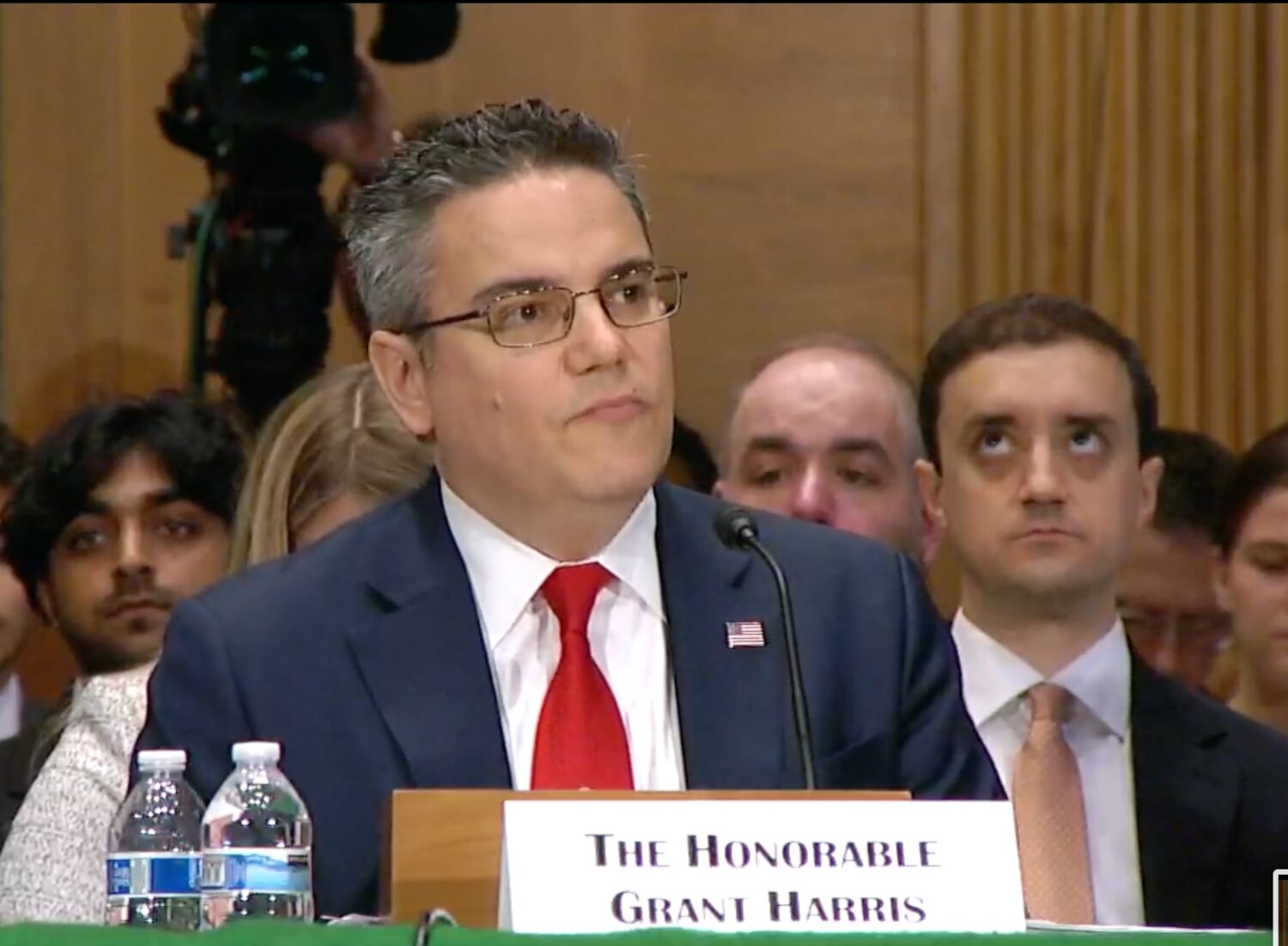
Industrial Security leadership from Treasury, Commerce, and the DoD testified before the Senate Banking Committee on Thursday, calling for resources and legislative support as demands on their remit grow The witnesses testified in support of Defense Production Act reauthorization, continued vigilance on outbound and inbound foreign investment, and enhanced resources for trade security at BIS.

July 24 the Bureau of Industy and Security published a Final Rule formalizing the changes to the Export Administration Regulations imposed by Congress in the emergency supplemental appropriation [HR 815] signed into law April 24th. As a result of this new FDP Rule, exporters require a U.S. Government authorization for transfer of these items when produced outside the United States with certain U.S. technology, software, or production equipment when exports are destined to Iran or for use in connection with certain equipment destined to Iran, even when such items were never exported from the United States.
The Emerging Technology Technical Advisory Committee (ETTAC) will meet on July 30, 2024. Open Session: 3:30 p.m. – 4:30 p.m. The open session will be accessible via teleconference. To join the conference, submit inquiries to Ms. Yvette Springer at Yvette.Springer@bis.doc.gov .

In coordination with the Departments of Treasury and State, the Commerce Department’s Bureau of Industry and Security (BIS) is announcing several significant additional export control restrictions and related actions against Russia.. Among the actions is the issuance of a final rule imposing additional export control measures against Russia and Belarus by expanding the scope of items identified under two EAR supplements that are subject to the EAR’s Russian and Belarusian industry sector sanctions; imposing a “software” license requirement for certain EAR99-designated “software” when destined to or within Russia or Belarus; and narrowing the scope of commodities and software that may be authorized for export, reexport, or transfer (in- country) to or within Russia or Belarus under License Exception Consumer Communications Devices (CCD).
The Emerging Technology Technical Advisory Committee (ETTAC) will meet on May 23 and 24, 2024, at 9:00 a.m.-3:00 …The Committee’s primary focus is the identification of emerging and foundational technologies that may be developed over a period of five to ten years with potential dual-use applications as early as possible in their developmental stages both within the United States and abroad, and any other matters relating to actions designed to carry out the policy set forth in Section 1752(1)(A) of the Export Control Reform Act. The purpose of the meeting is to have Committee members and U.S. Government representatives mutually review updated technical data and policy-driving information that has been gathered.
Bureau of Industry and Security (BIS) makes changes to the Russia and Belarus sanctions under the Export Administration Regulations (EAR) to add a new license exception for EAR99 medical devices and related parts, components, accessories, and attachments for use in or with medical devices that are destined for both countries and the temporarily occupied Crimea region of Ukraine, or the covered regions of Ukraine. The purpose of this final rule is to authorize under a license exception certain exports, reexports, and transfers (in-country) of “medical devices” that are being regularly approved and that advance U.S. national security and foreign policy interests. In addition, this final rule makes two corrections to the EAR related to Russia-related rules published in January, and March, 2024 by correcting an end-user control and adding a cross-reference correction.