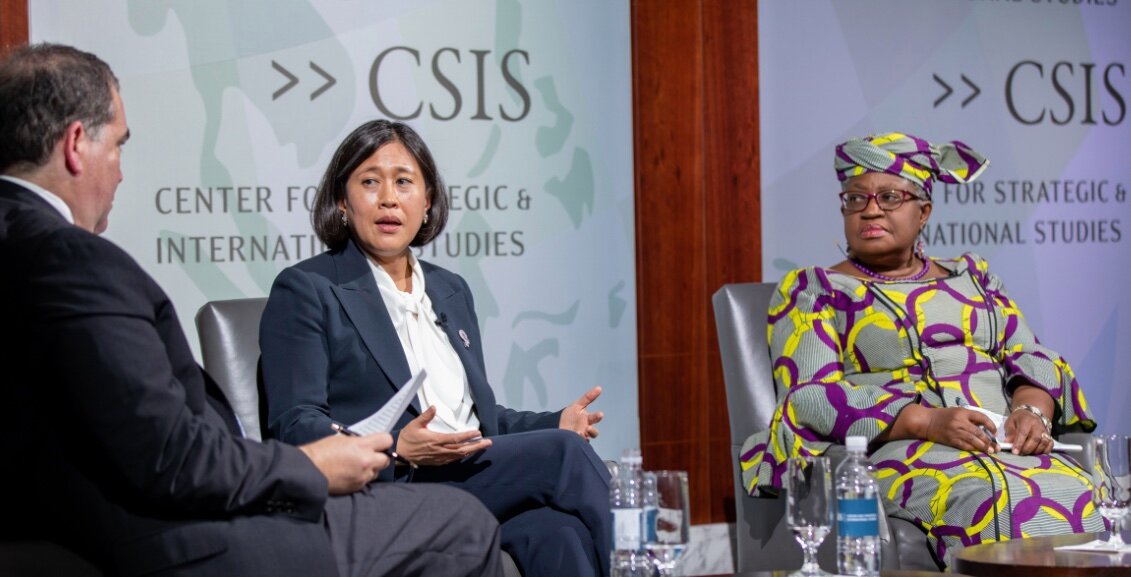
In a speech at Washington's CSIS, United States Trade Representative Katherine Tai outlined the Biden-Harris Administration's vision for a reformed World Trade Organization (WTO). The Ambassador emphasized the need for the WTO to adapt to contemporary challenges like climate change and non-market economic policies. She also reiterated that the rules governing the WTO should not be static but must be updated through ongoing negotiations among member states.
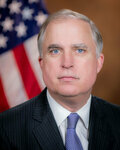
In a recent speech, Marshall Miller, principal associate deputy attorney general, emphasized consistency, predictability, and transparency in the Department of Justice’s (DOJ) approach to corporate enforcement, particularly in relation to national security. "National security laws must rise to the top of your compliance risk chart, with the recognition that even the most innocuous-looking transaction or activity could implicate our collective security."

The Department of Commerce’s Bureau of Industry and Security (BIS) released updates to its list of controlled “common high priority” items identified as critical to Russia’s war effort following meetings with key members of the Global Export Control Coalition. In coordination with partners, BIS has added seven new Harmonized System (HS) codes to the list, including bearings needed for heavy vehicles or other machinery and antennae used for navigation systems. Additionally, Tier 3 has been divided into mechanical and non- mechanical items to provide greater clarity.
Assistant Secretary for Investment Security Paul Rosen gave attendees of the Second Annual CFIUS Conference an update on enforcement and pending regulatory change. His remarks follow, well worth the read. For those without the time, here's the gist: "“We are on track to have more civil monetary penalties issued this year than we have in our entire history.”

Sen. Richard Blumenthal (D-CT), Chair of the Senate Permanent Subcommittee on Investigations (PSI), issued a subpoena to the Saudi Arabian Public Investment Fund’s (PIF) wholly-owned U.S. subsidiary, USSA International LLC, for documents related to PIF’s takeover of American golf and other investments throughout the United States. “The Saudi’s Public Investment Fund cannot have it both ways: if it wants to engage with the United States commercially, it must be subject to United States law and oversight,” Blumenthal said. “That oversight includes this Subcommittee’s inquiry.”
The Commerce Department’s Bureau of Industry and Security Regulations and Procedures Technical Advisory Committee met September 12th, with little news, but steady progress on the rulemaking front.

World Trade Organization Director-General Ngozi Okonjo-Iweala is developing a framework for carbon-pricing in order to further bolster the ongoing carbon border adjustment measures that are likely to be imposed by the European Union early next year while the United States appears to be developing a framework for imposing carbon duties, our correspondent has learned. Several members are expressing concern that instead of focusing on the core mandated and unresolved issues from the previous ministerial meetings, including the Doha Development Agenda, the DG appears to be frittering away the limited resources of the Secretariat on developing the carbon-pricing framework, an issue that has not been formally mandated by members or by trade ministers at any previous meeting, said several Secretariat insiders who asked not to be identified.

World Trade Organization Doha fisheries subsidies negotiations Chair Ambassador Einar Gunnarsson of Iceland has issued a draft text on the “disciplines on subsidies contributing to overcapacity and overfishing” pillar for upcoming negotiations in the fall, WTD has learned. The five-page restricted room document (RD/TN/RL/174) issued on Monday and seen by our correspondent, appears to contain asymmetries in the provision of carveouts to big subsidizers who contributed to the problem of global depletion of fish stocks on the one side, and special and differential treatment for developing and least developed countries on the other, said people familiar with the text.
House Ways and Means Committee Republicans are making sure European officials understand their opposition to an international tax agreement negotiated through the Organization for Economic Cooperation and Development. At meetings in Paris and Berlin, the Republicans said they will not support the Pillar One and Pillar Two tax agreements.

Huawei's release of a phone called the Mate 60 Pro has the industrial security community atwitter, if we can still use that word. The device boasts a processor fabricated at seven nanometers, a threshold of precision the allied export controls of chipmaking equipment were meant to thwart.
U.S. Commerce Secretary Gina Raimondo concluded a four-day visit to China this week, meeting with her counterpart, Chinese Commerce Minister Wang Wentao. The trip aimed to revive economic dialogue between the world's two largest economies, despite persistent tensions over trade issues and national security. According to a statement from the Chinese Commerce Ministry on Thursday, China has urged the U.S. to extend "equal treatment" to Chinese companies investing in the United States. "China demands the U.S. give equal treatment to Chinese enterprises investing in the U.S. in terms of market access, regulatory enforcement, public procurement, and policy support," said Shu Jueting, a commerce ministry spokesperson. China also raised "serious concerns" over the U.S. imposition of Section 301 tariffs, describing them as "discriminatory."
Based on a BIS review of the existing Section 232 exclusion process for areas of improvement and public comments on the current process for submissions to BIS, BIS is publishing this proposed rule to propose revisions to the Section 232 exclusions process, including to the Section 232 Exclusions Portal. The proposed rule to amend the Section 232 exclusions process comprises four salient modifications designed to refine efficiency, fairness, and transparency.

In the latest development of a decades-long trade dispute between Canada and the United States, the Canadian government has filed for a judicial review of last month's U.S. Commerce Department's assessment on softwood lumber duties. International Trade Minister Mary Ng described the levies as "unfair, unjust, and illegal" in a statement released earlier this week. The U.S. Commerce Department's fourth administrative review established a combined duty rate of 7.99%, a slight decrease from the previous rate of 8.59%. Canada’s softwood producers say they have paid more than $8-billion in lumber duties to the U.S. from 2017 to 2022.
The Securities and Exchange Commission has accepted an Offer of Settlement from Minnesota's 3M Company, closing its investigation into violations of the Foreign Corrupt Practices Act by 3M's …
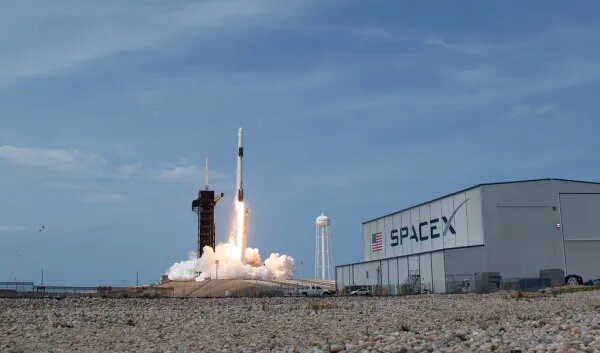
After complaining since at least 2005 that "we really need to do something about ITAR. It is really hurting U.S. industry,” and citing export controls for not hiring eligible non-citizens, South African immigrant Elon Musk's company SpaceX has been sued by the Justice Department for employment discrimination. The United States Department of Justice has filed a lawsuit against Space Exploration Technologies Corp. (SpaceX) for discriminating against asylees and refugees in its hiring process. The lawsuit contends that from September 2018 to May 2022, SpaceX deliberately discouraged such individuals from applying for positions within the company, violating the Immigration and Nationality Act (INA).

Chinese printer manufacture Ninestar, parent of Lexmark International, has filed a lawsuit against the U.S. Department of Homeland Security (DHS) and other related parties of the U.S. government before the U.S. Court of International Trade. DHS added Ninestar and certain of its subsidiaries to the Uyghur Forced Labor Prevention Act (UFLPA) Entity List, and the company "is suffering irreparable harm to its business and reputation based on the listing," according to a statement.

The Administration Thursday pulled the trigger on establishing a dispute settlement panel under the US-Mexico-Canada Agreement challenging Mexico’s ban on biotech corn. At issue is Mexico’s February 13, 2023 decree, banning the use of biotech corn in tortillas or dough, and the instruction to Mexican government agencies to gradually substitute the use of biotech corn in all products for human consumption and for animal feed.
The Bureau of Industry & Security published an advisory opinion on the release of licensed technology to employees of the foreign subsidiary while on temporary work assignment at the home office. No additional deemed export license is required for these employees, while any new “technology” or “software” that is either “released” to those employees in the United States or created in the United States that is not authorized by the existing BIS license would require a new export license or other authorization from BIS.
A World Trade Organization (WTO) dispute settlement panel has ruled that China acted inconsistently with its WTO obligations by imposing additional duties on specific imports from the United States (US). These duties were in response to the Section 232 duties that the US adopted in 2018 for steel and aluminum products. "China’s use of the WTO dispute settlement system to challenge the U.S. Section 232 national security actions has caused grave systemic damage to the WTO, said Sam Michael of the US Trade Representative's Office.
Arizona-based First Solar released findings from a third party audit of their Malaysia facility, highlighting unethical practices involving foreign migrant workers. The report details the actions taken by First Solar to address the issues, emphasizing the company's commitment to transparency and responsible solar energy development.